Dissection of the Frog
Product Code : SCL-BLE-11712
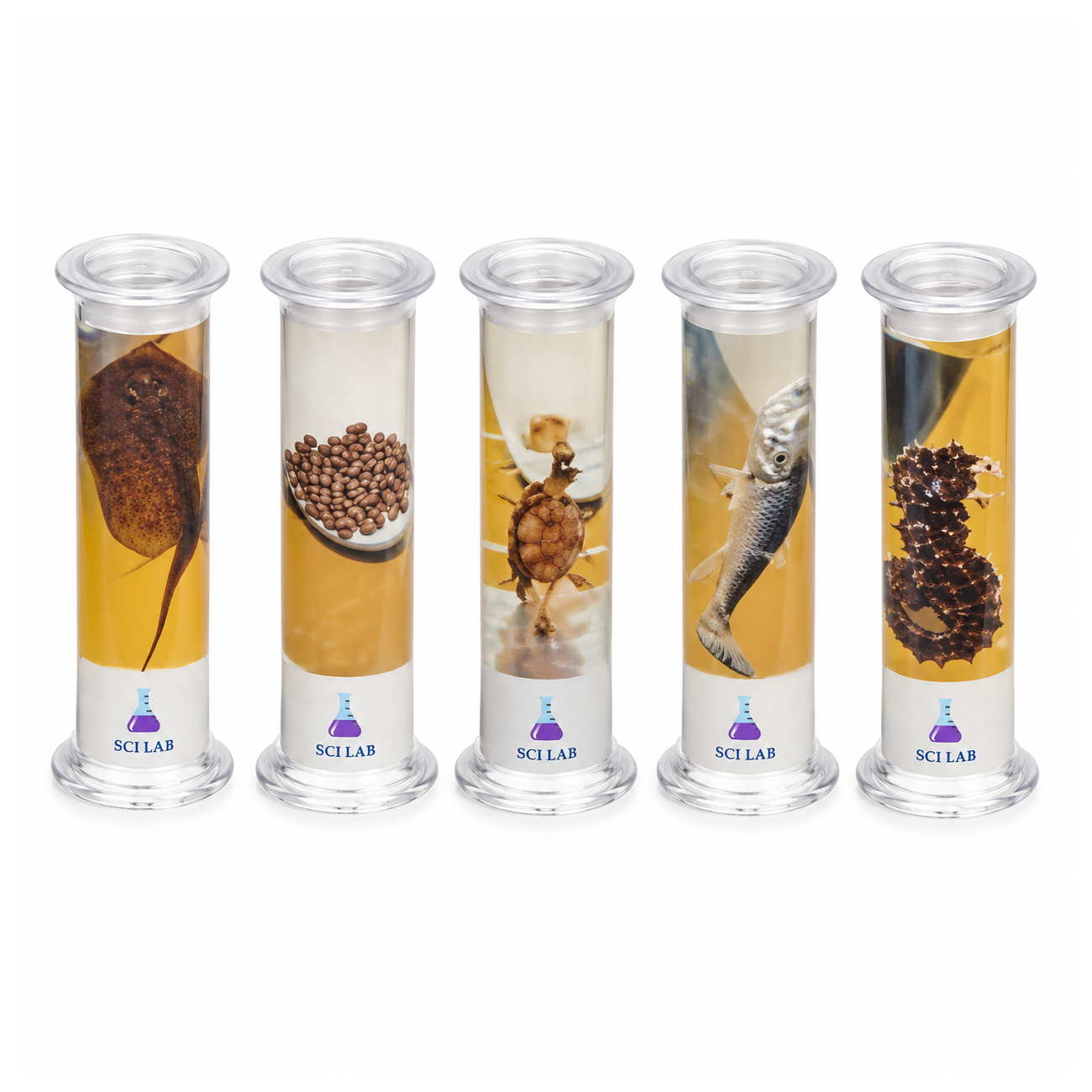
Dissection of the Frog (SKU SCL-BLE-11712) is a preserved frog dissection held in formalin and sealed inside a glass container of 200 x 70 x 40 mm. It lets a class examine the opened body of an amphibian without performing a dissection, which suits NCERT Class 11 frog anatomy lessons, B.Sc. zoology museum work and teacher-training demonstrations. Science Lab Supplies, a biology lab equipment supplier in India, can send this specimen from Ambala to schools, colleges, museums, tender contractors and distributors.
Specifications
Each fact about the frog specimen sits in its own row below. In short, the opened frog is kept in formalin preservative inside a sealed glass container measuring 200 x 70 x 40 mm, so it can be turned and viewed from every side while the seal stays intact and the preservative stays inside.
| Specification | Value |
|---|---|
| SKU | SCL-BLE-11712 |
| Product type | Preserved dissection specimen |
| Animal | Frog (amphibian) |
| Preparation | Dissected |
| Preservative | Formalin |
| Container | Glass, sealed |
| Container dimensions | 200 x 70 x 40 mm |
| Supplied by | Science Lab Supplies, Ambala, India |
Applications and Experiments for the Frog Dissection Specimen
The specimen teaches amphibian anatomy by direct observation: students locate the organs exposed by the dissection, trace the digestive, respiratory and circulatory systems, and match what they see to textbook diagrams. Because the container stays sealed, one specimen can be passed from group to group during a lesson.
- NCERT Class 11 Biology, Structural Organisation in Animals: morphology and anatomy of the frog.
- Class 9–12 and B.Sc. zoology: comparing amphibian organ systems with fish, reptile, bird and mammal specimens.
- Viewing fine detail through the glass with the Hand Magnifier, a 2X lens of 140 mm diameter.
- Relating the frog's alimentary canal to human anatomy on the Human Digestive System Model.
Formalin is a solution of formaldehyde, which is toxic and irritates the eyes, skin and airways. Keep the container closed and upright, store it away from heat, and let students handle it only with a teacher present.
Standard Scope of Supply
One dissected frog preserved in formalin is supplied, sealed in its 200 x 70 x 40 mm glass container. Dissecting instruments, trays, display stands and other animal specimens are not included; any of them can be added to the same quotation when a zoology museum or practical set is being built.
Packing, MOQ and Lead Time
A single frog specimen can be quoted for one teacher's demonstration, or a larger number for a school museum or several practical groups. Each quotation from Science Lab Supplies sets out the packing, delivery time and price for the quantity requested, and other preserved animals or models can share that quotation.
With an Importer-Exporter Code, Science Lab Supplies can ship to buyers in Oman, the Philippines, Nepal, Bangladesh, Zambia and Rwanda. Science Lab Supplies is registered for GST (GSTIN 06ADEPJ0574F2ZU). For a frog specimen price, send your quantity through the contact page, drop the item into the enquiry cart, or turn to the lab tender page for a formal bid.
Frequently Asked Questions
Can students study the frog without opening the container?
Yes. The dissection is sealed in a glass container, so the organs can be examined through the glass from all sides. Leaving the seal intact protects the specimen and keeps students away from the formalin inside.
Why is the frog kept in formalin?
Formalin preserves animal tissue so the dissected organs keep their shape for long-term display. It is also hazardous because it contains formaldehyde, so the container should stay closed, be stored upright away from heat and be handled under supervision.
Who supplies the Dissection of the Frog specimen?
The frog specimen is sourced and dispatched by Science Lab Supplies in Ambala, India, which quotes it directly to schools, colleges and distributors and can combine it with other preserved animals, models and charts on a single order.
Does the frog specimen match the other dissection specimens?
Yes. The lizard, rabbit and fish dissections in this range are also kept in formalin in sealed glass containers, and the lizard and rabbit containers share the 200 x 70 x 40 mm size, so a comparative series can be set out together.
Related Preserved Specimens and Zoology Aids
These items build the frog specimen into a comparative zoology display: four more preserved dissections from fish to mammal, a limb comparison model and two specimen sets for diversity and development lessons. Each one can be added to the same quotation as the frog when a biology museum or practical room is being equipped.
- Fish Dissection — fish dissection kept sealed in glass, container 200 x 70 x 40 mm.
- Lizard Dissection — reptile dissection preserved in formalin in a sealed glass container.
- ChickenDissection — chicken dissection held in formalin behind a glass seal.
- Rabbit Dissection — rabbit dissection stored in formalin in a 200 x 70 x 40 mm glass container.
- Comparison of Limbs in Vertebrates — enlarged model in PVC with non-toxic dyes showing the limbs of 5 vertebrate types.
- Educational Zoology Specimen Kit — kit for observing animal specimens and identifying their visible structures.
- Life Cycle Specimen Collection — specimen set for showing the visible developmental stages of an organism.
Browse the full Biology Lab Equipment range, the Dissecting and Surgical range for instruments and trays, or all school lab equipment.
Last updated: 9 October 2026