Drive Systems Kit
Product Code : LSK-ES-10484
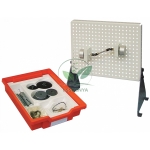
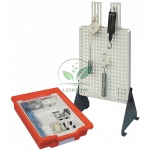
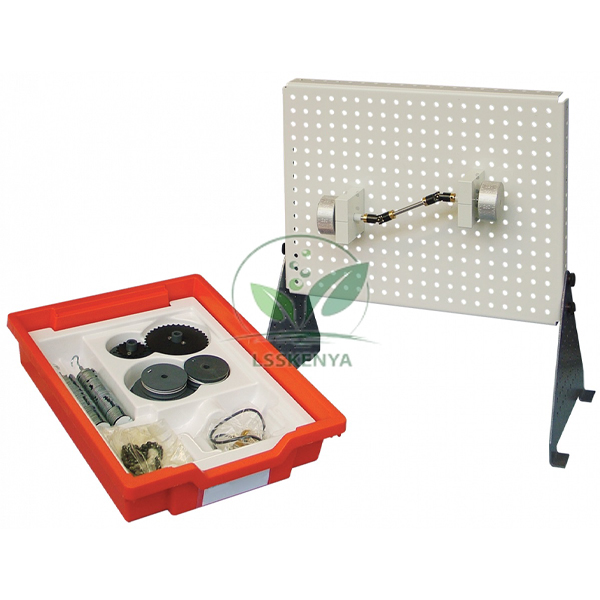
Drive Systems Kit (SKU LSK-ES-10484) lets students compare three ways of transferring motion and power: a universal coupling, a belt drive and a chain drive. Mounted on the Engineering Science Work Panel, it introduces gear ratio, pulley ratio and efficiency in secondary technology, polytechnic and TVET engineering science classes. The kit is manufactured by Science Lab Supplies at Plot 448, HSIIDC Industrial Area, Saha, Ambala, India, and schools, colleges, tender contractors and distributors can buy it from the maker without a trading layer.
Specifications
The Drive Systems Kit is detailed item by item in the table. In short, it holds three drive systems so students can weigh the relative advantages and disadvantages of each, plus extra parts that show why the angle of lap around a pulley matters and how it relates to friction.
| Specification | Value |
|---|---|
| SKU | LSK-ES-10484 |
| Drive systems | Universal coupling, belt drive, chain drive |
| Comparison | How each transfers motion (power); relative advantages and disadvantages |
| Extra parts | Angle of lap around a pulley and its relationship with friction |
| Terms introduced | Gear ratio, pulley ratio, efficiency |
| Series | Engineering Science kit series; parts rearrange for many experiments |
| Mounting | Engineering Science Work Panel (separate) |
| Manufacturer | Science Lab Supplies, Saha, Ambala, Haryana |
| Country of origin | India |
Applications and Experiments for the Drive Systems Kit
With the kit, students can set up each drive on the panel, compare input and output movement and loads, and calculate ratios and efficiency. It supports power transmission topics in diploma applied mechanics and theory of machines, secondary design and technology, and engineering science modules in TVET courses.
- Belt drive: pulley ratio and efficiency, linked to the radius ratio seen on the Wheel And Axle, On Stand.
- Chain drive: sprocket ratio compared with the belt drive.
- Universal coupling: transmitting motion between shafts at an angle.
- Angle of lap: its effect on belt friction, after basic sliding friction work with the Pair of Wooden Friction Blocks with Hooks.
Standard Scope of Supply
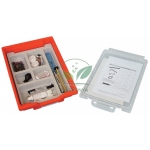
Supplied items are the universal coupling, belt drive and chain drive assemblies plus the extra parts for angle-of-lap experiments. The kit is designed for the Engineering Science Work Panel, which is a separate product; weights or other ancillaries you need are itemised on the quotation.
Packing, MOQ and Lead Time
Whether you need one kit or a set for each lab bench, the quotation gives packing, delivery time and price for that quantity. The work panel and other kits in the series can be added to the same document when you source engineering lab equipment in India.
Science Lab Supplies is a laboratory equipment exporter from India with an Importer-Exporter Code and can ship to buyers in Zambia, Rwanda, South Africa, Qatar, Sri Lanka and Vietnam. The business is registered under Udyam as a manufacturing enterprise (UDYAM-HR-01-0014546) and for GST (GSTIN 06ADEPJ0574F2ZU). Drive kit quantities can be sent through the contact page, held in the enquiry cart while you plan the lab, or matched to a tender using the lab tender page.
Frequently Asked Questions
Which drives are in the Drive Systems Kit?
A universal coupling, a belt drive and a chain drive, so students can compare how each transfers motion and power and weigh their advantages and disadvantages.
What is the angle of lap experiment?
Extra parts in the kit let students change how far a belt wraps around a pulley and see how this angle of lap affects friction between belt and pulley.
Is Science Lab Supplies the manufacturer or a trader?
Made at the Science Lab Supplies factory in Saha, Ambala, India, the Drive Systems Kit is quoted by its manufacturer, so prices, packing and delivery come from the people who build it.
Can it be quoted for a TVET or college tender?
Yes. Send the quantity, delivery location and tender specification, and the kit can be quoted item-wise with the panel and the rest of the series.
Related Engineering Science and Gear Train Apparatus
Drive experiments sit alongside other simple machine studies in the Engineering Science series, and gear apparatus from the theory of machines range takes ratio work further. The panel is required, the pulley and friction kits extend the efficiency work, and the storage items keep every kit tray organised.
- Engineering Science Work Panel — perforations let parts be fixed in any position suited to the experiment.
- Pulley Kit — wheel and axle with single, double and triple sheave pulleys for velocity ratio work.
- Rotational Friction Kit — introduces velocity ratio, efficiency, mechanical advantage and overhaul.
- Engineering Science Storage Unit — one person can push all the trays from room to room.
- Engineering Science Spares Kit — replaces lost fixings and cord, and lets teachers add parts to experiments.
- Generation of Involute Gear Tooth Profile — three acrylic discs of 450, 300 and 200 mm pitch circle diameter with a rack-type cutter.
- Epicyclic Gear Train Holding Torque Apparatus — sun gear on a motor-driven input shaft, with rope brake loading.
Browse the full Engineering Science range, the Theory of Machine Lab Equipments range, or all engineering laboratory equipment.
Last updated: 22 October 2026