
Paramecium Educational Chart
.jpg)
Product Code : SCL-CP-12229
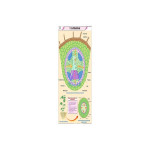
Paramecium Educational Chart (SKU SCL-CP-12229) is a labelled biology chart of Paramecium, the single-celled ciliate protozoan, covering its structure, movement, feeding and osmoregulation. It gives students a clear reference before or after they look at protozoa under a microscope, and suits school biology, zoology, protozoology and microbiology lessons. Science Lab Supplies, working from Ambala, India, quotes it for schools, colleges, microbiology classrooms and distributors.
Specifications
The Paramecium chart's content and order details follow in the table. In short, it is one teaching chart presenting the cell features of this unicellular ciliate, including cilia, oral groove and vacuoles; chart size, print material, lamination, mounting, labels and language are confirmed on the quotation.
| Specification | Value |
|---|---|
| SKU | SCL-CP-12229 |
| Product type | Educational biology wall chart |
| Subject area | Biology, protozoology, microbiology and zoology |
| Organism | Paramecium, a single-celled ciliate protozoan |
| Structures covered | Cilia, oral groove, food vacuoles, contractile vacuoles, nucleus, outer body covering |
| Processes covered | Movement, feeding and osmoregulation |
| Quantity | 1 chart per unit |
| Display | Wall, board or chart stand |
| Chart size | Confirmed on the quotation |
| Print material and lamination | Confirmed on the quotation |
| Mounting format | Confirmed on the quotation |
| Labels and language | Confirmed on the quotation |
| Care | Store flat or rolled, away from moisture, dust and direct sunlight |
| Supplied by | Science Lab Supplies, Ambala, India |
Applications and Experiments for the Paramecium Chart
Because Paramecium is tiny and moves quickly under the microscope, a large labelled reference helps students name what they see. The chart shows the cilia, oral groove, food vacuoles and contractile vacuoles at a size the whole class can read, ready for prepared-slide work, wet-mount discussion and unicellular-organism lessons without live cultures.
- Class 9 biology (The Fundamental Unit of Life) and Class 11 (Biological Classification): unicellular life and protists.
- Wet-mount practicals: pond-water drops on Glass Microscope Slides covered with a Cover Glass Slide, compared with the chart.
- B.Sc. zoology: contrasting a ciliate with a freshwater cnidarian on the Hydra Specimen Prepared Slide.
- Microbiology classrooms: cell organisation, feeding and osmoregulation in protozoa.
Standard Scope of Supply
Supply is one Paramecium Educational Chart per unit. Hanging rods, a frame, a storage roll or a teacher guide can be requested on the same quotation, and the printed labels, size and finish are confirmed there so the chart fits your course before packing.
Packing, MOQ and Lead Time
Quotations are available for one chart or a batch for several microscope rooms, distributors and tenders for biology lab equipment in India. Each states packing, delivery time and price for the requested quantity, and slides or models can be listed with it.
Using its Importer-Exporter Code, Science Lab Supplies can ship to buyers in Peru, Egypt, Iraq, Nigeria, Kenya and Ghana. Write to the team on the contact page, save the chart to the enquiry cart with other items, or consult the lab tender page for bid paperwork.
Frequently Asked Questions
What structures can students identify on the chart?
Students can identify the cilia, oral groove, food vacuoles, contractile vacuoles, nucleus and outer body covering wherever these are printed on the final artwork, and relate each structure to movement, feeding or water balance.
How does the chart support microscope practicals?
It gives a labelled reference before or after students observe protozoa slides or wet mounts, so they know which features to look for and can check their drawings against the chart afterwards.
Do students need a live culture to use it?
No. The chart teaches protozoan structure without live culture handling. Live or prepared material can be added later for microscope work, with the chart as the shared reference throughout the lesson.
Who supplies the Paramecium Educational Chart?
Supply comes from Science Lab Supplies in Ambala, India. Its quotations can bundle this chart with protozoa slides, cell models and microscopes, so a school or distributor can source a full microscopy lesson from one place.
Related Protozoa Models, Slides and Microscopy
These models, slides and instruments move the Paramecium lesson from the chart to three-dimensional models and real microscope observation. Any of them can be quoted alongside this chart for a protozoology or microscopy practical.
- Paramecium 3D Model — hand-painted PVC cross-section showing the oral groove and cytoproct.
- Amoeba Cell Structure Model — another protozoan, with endoplasm, ectoplasm and contractile vacuole.
- Amoeba — prepared slide on borosilicate glass, 25.4 x 76.2 mm.
- Entamoeba Educational Microscope Slide — prepared slide for observing amoeboid protozoan structure.
- Biological Prepared Slide Kit (10 Slides) — ten ready-to-view biological specimens.
- Compound Biological Microscope — 4X, 10X and 40X objectives with LED lighting.
- Cavity Glass Slide Collection — recessed-well slides for liquid samples and small organisms.
Browse the full Charts & Portraits range, the Microscope Slides and Cameras range, or all Educational Lab Equipment.
Last updated: 9 October 2026
.jpg)
.jpg)
.jpg)
.jpg)
.jpg)
.jpg)
.jpg)