pH Tester, Checker Plus Type
Product Code : SCL-PL-12320
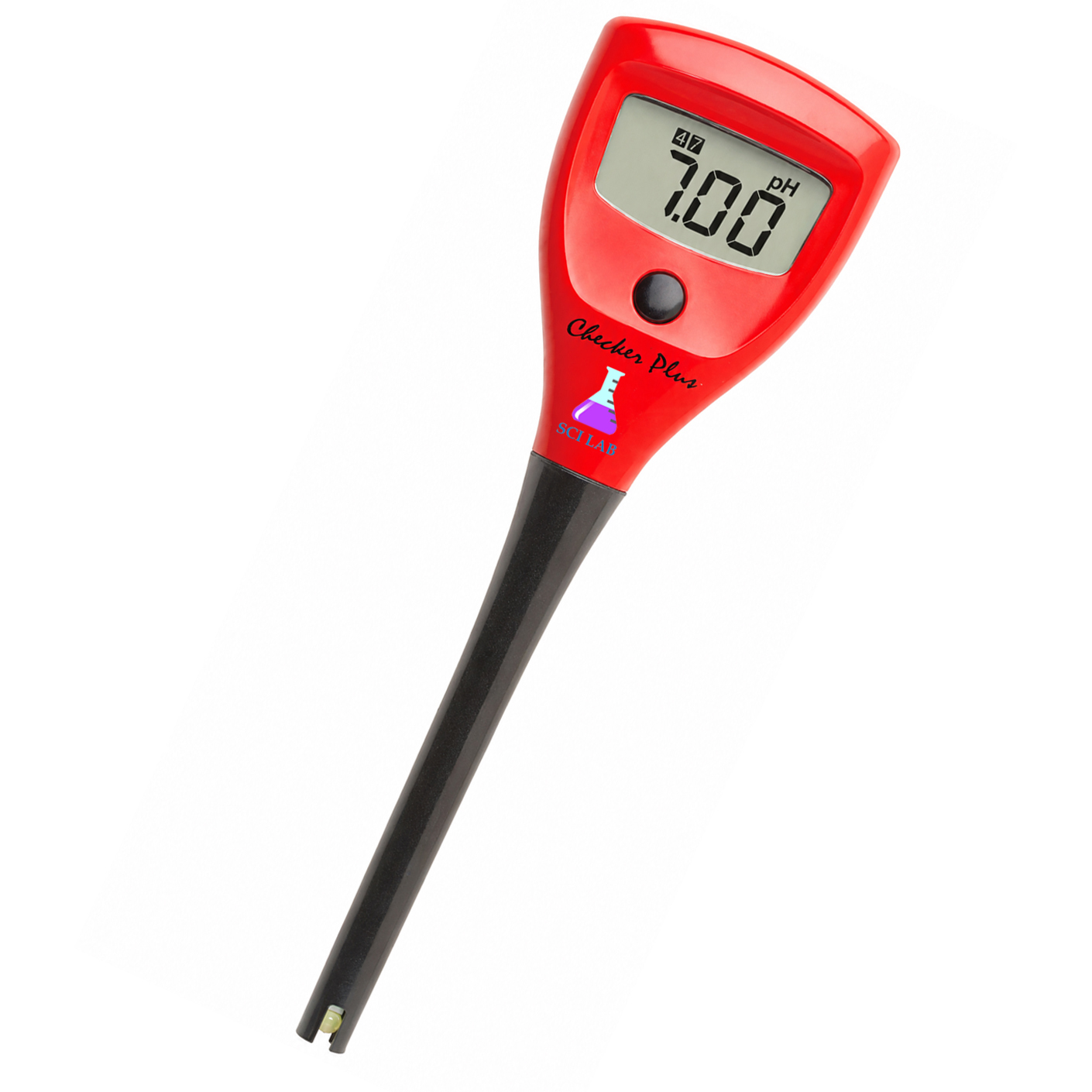
pH Tester, Checker Plus Type (SKU SCL-PL-12320) is a pocket digital pH tester that reads 0 to 14 pH with 0.01 pH resolution and calibrates itself at two points. Students and teachers use it to check acids, bases, buffers, soil extracts and water samples in school and college practicals. The tester, its buffers and spares are supplied by Science Lab Supplies from Ambala, India to schools, colleges, training centres, distributors and tender contractors.
Specifications
The compact 71 x 50 x 21 mm body runs on a single CR 2032 button cell and carries a directly mounted general-purpose pH electrode. Readings are given to 0.01 pH with an accuracy of ±0.2 pH, and calibration is automatic at two points using the supplied buffer sachets.
| Parameter | Value |
|---|---|
| SKU | SCL-PL-12320 |
| Measuring range | 0 to 14 pH |
| Resolution / accuracy | 0.01 pH / ±0.2 pH |
| Calibration | Automatic, 2-point |
| Dimensions | 71 x 50 x 21 mm |
| Power supply | 1 x CR 2032 button cell |
| Electrode | General-purpose pH electrode, plastic body Ø8 x 113 mm, viscolene electrolyte, 0 to 13 pH, 0 to 50 °C, mounts directly on the tester |
| Supplied by | Science Lab Supplies, Ambala, India |
Applications and Experiments for the pH Tester
A pocket tester gives each group a direct pH reading instead of judging a colour on indicator paper. It suits acid-base lessons, buffer preparation, and field or bench testing of water and soil samples, with the electrode rated for samples between 0 and 50 °C.
- CBSE/NCERT Class 10: pH of acids, bases and salts from everyday life.
- Class 11–12 chemistry: ionic equilibrium, buffers and salt hydrolysis.
- B.Sc. chemistry and environmental science: pH of water and soil samples.
- Biology practicals on enzyme activity at different pH values.
Standard Scope of Supply
The tester comes with a general-purpose pH electrode, a battery and a manual. The listing also includes 500 ml of preservative solution for pH and RedOx electrodes, pH 4.01, 7.01 and 10.01 buffers in packs of 25 x 20 ml sachets each, a spare CR 2032 battery and a spare pH electrode of the same type.
Packing, MOQ and Lead Time
You may ask for one tester or a set for every practical group; the quotation gives packing, delivery time and price for that number. Extra buffer sachets and spare electrodes can be listed alongside, and you can ask for the digital pH meter price in India for bench models at the same time.
Because it holds an Importer-Exporter Code, Science Lab Supplies can ship to buyers in Nigeria, Kenya, Ghana, Ethiopia, Tanzania and Uganda. Science Lab Supplies is registered for GST (GSTIN 06ADEPJ0574F2ZU). Send your list through the contact page or the enquiry cart, and use the lab tender page for tender documents.
Frequently Asked Questions
How is the pH tester calibrated?
Calibration is automatic at two points. Dip the electrode in two of the supplied buffers, such as pH 7.01 and pH 4.01 or 10.01, and the tester sets itself from them.
How long do the buffer and preservative solutions last?
Shelf life depends on the chemical, its grade and storage conditions; ask us for the expiry date of the batch you are quoted.
Who supplies the pH Tester, Checker Plus Type?
Science Lab Supplies supplies it from Ambala, India, along with the buffer sachets, preservative solution and spare electrode listed here.
Related Chemistry Lab Items
These items support pH work at the bench: distilled water for rinsing and dilution, a chemistry equipment set with beakers and flasks, the consumables kit with acids and bases to test, and eye protection for students handling them. All can be quoted with the tester.
- Water Distiller, Type Puridest PD 2 R — 2 l/h of distilled water for rinsing the electrode.
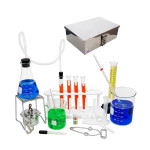
- CH2 Chemistry Set - Basic Equipment 2 — beakers, Petri dish, funnel and flask in a storage box.
- Consumables Kit for General Chemistry Cabinets — acids and other chemicals to test.
- Safety Goggles, Polycarbonate, 12 pcs — eye protection while handling acids and bases.
Browse the full Physics Lab range or all physics lab equipment.
Last updated: 25 September 2026