Balls Styrofoam

Product Code : LSK-CL-10043
Balls Styrofoam (SKU LSK-CL-10043) is a 100 g pack of lightweight polystyrene foam spheres for classroom and laboratory use. Students join the balls into models of atoms and molecules, and hang single balls on thread for simple electrostatic experiments. The pack suits middle-school science, secondary chemistry and physics, and teacher-training workshops. Science Lab Supplies, a laboratory equipment supplier in India, dispatches it from Ambala to schools, colleges, training institutes, tender contractors and distributors.
Specifications
The item is one pack of foam balls with a total weight of 100 g. Polystyrene foam is very light and can be pierced with a pin or cocktail stick, so the balls join easily into ball-and-stick structures or can be hung as small charged bodies. Ball diameters and the approximate count are stated on the quotation.
| Parameter | Value |
|---|---|
| SKU | LSK-CL-10043 |
| Material | Styrofoam (polystyrene foam) |
| Pack size | 100 g |
| Typical uses | Atom models; electrostatic experiments; general lab model work |
| Supplied by | Science Lab Supplies, Ambala, India |
Applications and Experiments for the Styrofoam Balls
Styrofoam balls are used wherever a light, low-cost sphere is needed. In chemistry they stand in for protons, neutrons, electrons or whole atoms in structure models; in physics a foam ball hung on a thread shows attraction and repulsion when a charged rod is brought near.
- Class 9 science (Structure of the Atom): Bohr-style models of the first few elements.
- Class 11 chemistry: ball-and-stick models showing molecular shapes and bond angles.
- Class 8 science: charging by rubbing, with a suspended ball and a rubbed rod.
- Science fairs and B.Ed. workshops: low-cost crystal, molecule and display models.
Keep the pack away from flames and avoid solvent-based glues or paints, which dissolve polystyrene foam; water-based products work well.
Standard Scope of Supply
Each order line is one 100 g pack of Styrofoam balls, as described above. Thread, sticks, paint and charging rods are not part of the pack; an ebonite rod or electroscope for the electrostatics lesson can be added to the same quotation.
Packing, MOQ and Lead Time
Order a single 100 g pack for one teacher's demonstrations, or several packs for a whole class; the quotation you receive states packing, delivery time and price for that quantity. Atom models, glassware and other school chemistry lab equipment in India can be quoted alongside the foam balls.
With an Importer-Exporter Code in place, Science Lab Supplies is able to ship to buyers in Bangladesh, Zambia, Rwanda, South Africa, Qatar and Sri Lanka. To ask for a quote, write through the contact page, add the pack to the enquiry cart, or check the lab tender page for institutional purchasing.
Frequently Asked Questions
What are Styrofoam balls used for in a science lab?
Mainly for building atom and molecule models and for simple electrostatic experiments, where a light ball on a thread shows attraction and repulsion. They also serve for science-fair and display models.
How much does one pack contain?
One pack contains 100 g of foam balls. Because the foam is so light, that weight covers a good number of spheres; ball sizes and the approximate count are given on the quotation.
Who supplies the Balls Styrofoam?
Science Lab Supplies supplies this pack from Ambala, India, and can combine it on one quotation with other chemistry and physics teaching items for schools, colleges and distributors.
Can several packs be quoted for a school tender?
Yes. Send the number of packs, the delivery location and any tender specification through the contact page for an item-wise quotation.
Related Atomic Structure and Electrostatics Items
Foam balls usually form one part of a lesson on atoms or static electricity. These four chemistry lab items extend the same lessons, from ready-made atom models to the rod and detector used to show charge, and all four can share one quotation with the foam balls.
- Atom Activity Model — kit for building atomic structures in class.
- Model of The Atom — demonstration model of nucleus and shells.
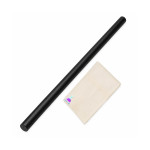
- Ebonite Rod — rubbed to charge objects in electrostatics.
- Electroscope — detects and compares electric charge.
Browse the full Chemistry Lab range or all school lab equipment.
Last updated: 25 September 2026

250ml.jpg)

.jpg)
.png)