
Blowpipe Carbon Blocks
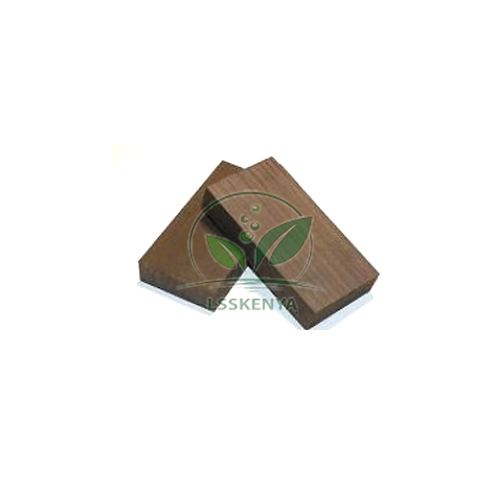
Product Code : LSK-CL-10045
Blowpipe Carbon Blocks (SKU LSK-CL-10045) are compressed rectangular carbon (charcoal) blocks made for blowpipe work. A small sample of a salt or mineral is placed in a hollow on the block and heated with a blowpipe flame, and the residue, bead or coating left behind helps identify it. They are used in inorganic qualitative analysis at senior secondary and college level. Science Lab Supplies offers the blocks from Ambala, India to schools, colleges, training institutes, tender contractors and distributors.
Specifications
Each block is compressed carbon formed into a rectangular shape, giving a flat, firm surface that can be scooped to hold a sample. Carbon itself acts as a reducing agent in the flame, which is why charcoal blocks are the traditional support for blowpipe tests. Block dimensions are given on the quotation.
| Parameter | Value |
|---|---|
| SKU | LSK-CL-10045 |
| Also called | Charcoal block for blowpipe analysis |
| Material | Compressed carbon |
| Shape | Rectangular block |
| Use | Blowpipe work and dry tests in qualitative analysis |
| Supplied by | Science Lab Supplies, Ambala, India |
Applications and Experiments for the Blowpipe Carbon Blocks
The blocks serve as the heat-resistant, reducing support for charcoal-cavity tests. With a blowpipe the reducing part of a flame is directed onto the sample, and students record whether a metallic bead forms, what colour the incrustation is and whether the residue glows or fuses.
- Class 12 chemistry: preliminary dry tests for cations in salt analysis.
- B.Sc. inorganic chemistry practicals: charcoal-cavity reduction tests.
- Geology and mineralogy labs: blowpipe identification of mineral samples.
- Cobalt nitrate test on the residue for certain oxides.
The block, sample and flame become very hot, and some residues give off harmful fumes; work in a ventilated area, use tongs, and let students carry out blowpipe tests under supervision.
Standard Scope of Supply
The Blowpipe Carbon Blocks are supplied as compressed rectangular blocks, as described above; the number of blocks per pack is confirmed on the quotation. The blowpipe, burner and crucible tongs are separate items and can be added to the same order.
Packing, MOQ and Lead Time
Whether you need a few blocks for a teacher's demonstration or enough for every student in a salt-analysis batch, ask for a quotation; it will set out packing, delivery time and price for that quantity. Other chemistry lab instruments from the same supplier can travel on one order.
Because it holds an Importer-Exporter Code, Science Lab Supplies can ship to buyers in Rwanda, South Africa, Qatar, Sri Lanka, Vietnam and Malaysia. Requests can be sent from the contact page or built up in the enquiry cart, and the lab tender page explains how tender enquiries are handled.
Frequently Asked Questions
Why is carbon used for blowpipe work?
Carbon withstands the flame and helps reduce metal compounds, so many salts leave a characteristic metal bead or coloured coating on the block that points to the metal present.
How many blocks come in a pack?
The pack quantity and block size are stated on the quotation. Send your required number through the contact page and the blocks will be quoted to suit your class size.
Who supplies the Blowpipe Carbon Blocks?
They are supplied by Science Lab Supplies from Ambala, India, alongside blowpipes, burners and other apparatus for qualitative analysis.
Can the blocks be reused?
A block can usually take several tests if the used cavity is scraped clean or a fresh hollow is cut, but it wears away with use and is treated as a consumable.
Related Blowpipe and Flame Test Items
Carbon blocks work together with a flame source and a blowpipe. The four items below complete a dry-test station for salt and mineral analysis, and they can be quoted with the blocks.
- Blowpipe Nickel Plated Brass — directs the flame onto the sample on the block.
- Bunsen Burner (Pack of Two) — gas flame for blowpipe and flame tests.
- Cobalt Blue Glass (Flame Testing) — filter for reading potassium flame colours.
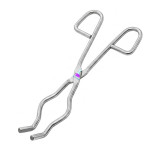
- Crucible Tongs — for handling hot blocks and residues.
Browse the full Chemistry Lab range or all school lab equipment.
Last updated: 25 September 2026

.jpg)
.png)