Electrode Rod
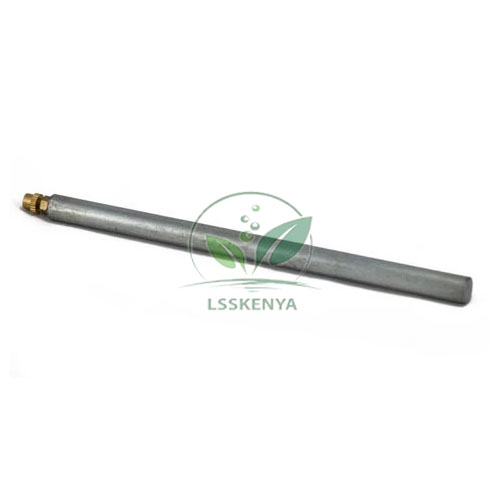
Product Code : LSK-CL-10056
Electrode Rod (SKU LSK-CL-10056) is a slim 100 x 10 mm electrode with a terminal, available in aluminium, carbon, copper, iron or zinc. Rods fit through stoppers and into narrow vessels such as U-tubes, beakers and voltameters, so they are the everyday electrode for electrolysis and cell experiments in school and college chemistry. Supply is handled by Science Lab Supplies from Ambala, India for schools, colleges, training institutes, tender contractors and distributors.
Specifications
Every rod is 100 mm long and 10 mm in diameter, with a terminal at one end for a connecting lead. The five listed materials give inert (carbon) and reactive (aluminium, copper, iron, zinc) options, so students can see how the choice of electrode changes the products of electrolysis.
| Parameter | Value |
|---|---|
| SKU | LSK-CL-10056 |
| Size | 100 x 10 mm |
| Terminal | Yes, for connecting lead |
| Materials available | Aluminium; carbon; copper; iron; zinc |
| Use | Electrochemistry experiments |
| Supplied by | Science Lab Supplies, Ambala, India |
Applications and Experiments for the Electrode Rods
Electrode rods are the working electrodes of most classroom electrolysis. Carbon rods give inert electrodes for electrolysing salt solutions, copper rods show copper transfer from anode to cathode, and iron, zinc and aluminium rods let students build cells and study corrosion and reactivity.
- Class 10 science: electrolysis of copper sulphate with carbon or copper electrodes.
- Class 12 chemistry: electrode potentials and cells from different metal pairs.
- B.Sc. practicals: products of electrolysis with inert and active electrodes.
- Corrosion and sacrificial-protection demonstrations with iron and zinc.
Standard Scope of Supply
You receive one 100 x 10 mm Electrode Rod with terminal in each material ordered – aluminium, carbon, copper, iron or zinc. Connecting leads, electrolysis vessels and solutions are not included and can be added as separate lines on the same quotation.
Packing, MOQ and Lead Time
Rods may be quoted one at a time, as a set covering all five materials, or in quantities for a full class. The quotation confirms packing, delivery time and price per material and quantity, and plates, voltameters or other chemistry lab equipment in India can be included.
Through its Importer-Exporter Code, Science Lab Supplies can ship to buyers in Ghana, Ethiopia, Tanzania, Uganda, the UAE and Saudi Arabia. Science Lab Supplies is registered for GST (GSTIN 06ADEPJ0574F2ZU). Enquire through the contact page, build a list in the enquiry cart, or check the lab tender page when buying under a tender.
Frequently Asked Questions
Which electrode rod should I use for electrolysis of salt solutions?
Carbon rods are the usual choice because they are inert and do not dissolve; copper rods are chosen when you want to show copper moving from anode to cathode.
What size are the rods?
Each rod is 100 x 10 mm and has a terminal for attaching a lead.
Who supplies the Electrode Rod?
Science Lab Supplies supplies the rods from Ambala, India, in any of the five listed materials and in class-sized sets.
Is a carbon rod for a voltameter available separately?
Yes. A carbon rod mounted in a glass tube for voltameters is listed as a separate product, linked below.
Related Electrodes and Voltameters
These four items belong with the rods on an electrolysis bench: flat plates for larger surfaces, a glass-sheathed carbon rod and a platinum rod for voltameters, and a voltameter to use them in.
- Electrode Plate — 100 x 45 mm plates with socket terminal.
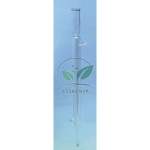
- Electrode Rod Carbon Voltameter — carbon rod in a glass tube.
- Electrode Rod Platinum — inert platinum electrode.
- Voltameter — for electrolysis and gas-volume experiments.
Browse the full Chemistry Lab range or all school lab equipment.
Last updated: 25 September 2026


Porcelain.jpg)