Electrode Rod Platinum
Product Code : LSK-CL-10058
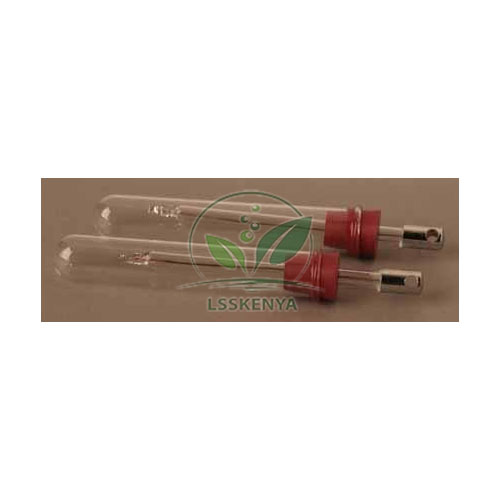
Electrode Rod Platinum (SKU LSK-CL-10058) is an electrochemistry electrode made of a 100 × 10 mm rod carried in a glass tube with a terminal, with a leaf of platinum at its working end. Chemistry teachers use it in electrolysis and cell experiments that need an inert electrode. From its base in Ambala, India, Science Lab Supplies supplies this electrode to schools, colleges, training institutes, tender contractors and distributors, alongside other chemistry lab equipment in India.
Specifications
The electrode is a 100 × 10 mm rod housed in a glass tube that ends in a terminal for a connecting lead. The far end carries a platinum leaf, the surface that meets the solution. Platinum resists attack in most electrolytes, so it acts only as a conductor during the reaction.
| Parameter | Value |
|---|---|
| SKU | LSK-CL-10058 |
| Rod size | 100 × 10 mm |
| Working end | Leaf of platinum |
| Housing | Glass tube with terminal |
| Use | Electrochemistry experiments |
| Supplied by | Science Lab Supplies, Ambala, India |
Applications and Experiments for the Platinum Electrode Rod
The platinum electrode rod serves as an inert anode or cathode in school and college electrochemistry. It suits electrolysis of water and salt solutions, where the products should come from the electrolyte rather than the electrode, and it fits the electrochemistry unit of NCERT Class 12 chemistry and B.Sc. physical chemistry practicals.
- Class 10 science: electrolysis of acidified water to collect hydrogen and oxygen.
- Class 12 chemistry: comparing inert and active electrodes in aqueous salt electrolysis.
- B.Sc. practicals: electrode-process experiments that need a non-reactive surface.
Standard Scope of Supply
The Electrode Rod Platinum is supplied as a single unit as described above: the 100 × 10 mm rod in its glass tube with terminal and platinum leaf. Connecting leads, a power supply and the electrolysis vessel are separate items and are listed on the quotation when you ask for them.
Packing, MOQ and Lead Time
Order a single electrode or a set for every bench in the chemistry lab. Whatever the quantity, the quotation spells out packing, delivery time and price, and matching leads, voltameters or other electrodes can be added so the whole electrochemistry order is quoted together by one chemistry lab instruments supplier.
Science Lab Supplies holds an Importer-Exporter Code as a registered exporter and can ship to buyers in Tanzania, Uganda, the UAE, Saudi Arabia, Oman and the Philippines. To start an order, write to us through the contact page, collect items in the enquiry cart, or read about bulk supply on the lab tender page.
Frequently Asked Questions
Why use a platinum electrode instead of copper or carbon?
Platinum is chemically inert in most electrolytes, so it does not dissolve or react during electrolysis. The products you see come from the solution itself, which makes results easier to interpret in class.
What size is this electrode?
The rod measures 100 × 10 mm and is held in a glass tube with a terminal at one end. A leaf of platinum forms the working surface at the other end.
Who supplies the Electrode Rod Platinum?
It is supplied by Science Lab Supplies from Ambala, India. We quote it for schools, colleges and contractors, on its own or together with other electrochemistry items from our chemistry range.
Is a power supply included?
No. The electrode is sold on its own. A low-voltage DC source, leads and a suitable vessel are needed for electrolysis and can be added to the same quotation.
Related Electrochemistry Equipment
These four items build out an electrochemistry bench around the platinum electrode: other electrode materials for comparison runs, a carbon voltameter rod, and a Hoffman voltameter for collecting and measuring the gases produced, so students can compare inert and reactive electrodes in one session.
- Electrode Rod — 100 × 10 mm rods in aluminium, carbon, copper, iron and zinc.
- Electrode Plate — 100 × 45 mm plates for a larger electrode area.
- Electrode Rod Carbon Voltameter — carbon rod in glass tube, another inert option.
- Hoffman Voltameter With Electrodes — graduated limbs for collecting hydrogen and oxygen.
Browse the full Chemistry Lab range or all school lab equipment.
Last updated: 25 September 2026


forLiquids.jpg)