Flask Thermos Dewar
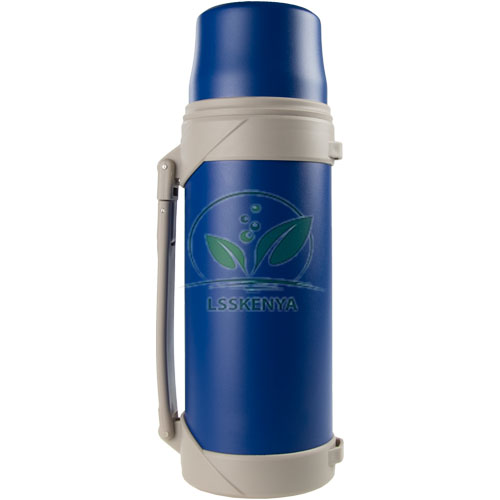
Product Code : LSK-CL-10059
Flask Thermos Dewar (SKU LSK-CL-10059) is a cylindrical vacuum flask of silvered glass held in a plastic container with a screw cap. The vacuum and silvering cut heat flow by conduction, convection and radiation, so a liquid inside stays hot or cold far longer than in a beaker. Chemistry and physics labs use it for calorimetry and for holding ice or cold mixtures. Science Lab Supplies, a laboratory glassware supplier in India, ships it from Ambala to schools, colleges, institutes, contractors and distributors.
Specifications
This Dewar flask is a cylindrical, double-walled glass vessel with a vacuum between the walls and silvered surfaces facing it. The glass insert sits inside a protective plastic container, and a screw cap closes the top to limit heat exchange with the room during an experiment.
| Parameter | Value |
|---|---|
| SKU | LSK-CL-10059 |
| Also known as | Dewar flask, vacuum flask, thermos flask |
| Shape | Cylindrical |
| Inner vessel | Vacuum, silvered glass |
| Outer case | Plastic container |
| Closure | Screw cap |
| Supplied by | Science Lab Supplies, Ambala, India |
Applications and Experiments for the Dewar Flask
A Dewar flask works as a simple insulated calorimeter for measuring heats of reaction, neutralisation and solution, and as a store for ice-water baths or cold samples. It supports thermochemistry in NCERT Class 11 chemistry, heat-transfer lessons in school physics, and B.Sc. physical chemistry practicals.
- Class 11 chemistry: enthalpy of neutralisation of a strong acid with a strong base.
- B.Sc. practicals: heat of solution and water equivalent of a calorimeter.
- School physics: showing how a vacuum and silvering reduce the three modes of heat transfer.
- General lab use: keeping ice, cold buffers or freezing mixtures at a steady low temperature.
Handle the flask gently: the thin glass insert can break if knocked or if very hot and very cold liquids are poured into it in quick succession.
Standard Scope of Supply
Each Flask Thermos Dewar comes as the vacuum silvered glass vessel fitted in its plastic container, closed with the screw cap. A thermometer and stirrer for calorimetry work are separate items and can be listed on the quotation.
Packing, MOQ and Lead Time
Quotations are available for one flask or for a full class set. Each quotation from Science Lab Supplies sets out the packing, delivery time and price for the number you need, and thermometers or other calorimetry items can be quoted on the same sheet.
Because Science Lab Supplies is a registered exporter holding an Importer-Exporter Code, it can ship to buyers in Uganda, the UAE, Saudi Arabia, Oman, the Philippines and Nepal. Send your list from the enquiry cart, ask a question on the contact page, or see the lab tender page for institutional orders.
Frequently Asked Questions
What is a Dewar flask used for in a chemistry lab?
It serves as an insulated vessel for calorimetry, such as finding the heat of neutralisation, and for keeping ice or cold liquids at a steady temperature during an experiment.
How does the flask keep liquids hot or cold?
The vacuum between the glass walls blocks conduction and convection, and the silvered surfaces reflect radiant heat. The screw cap reduces losses through the opening.
Who supplies the Flask Thermos Dewar?
Science Lab Supplies, a chemistry lab instruments supplier, sends this flask from Ambala, India, to schools, colleges and contractors, and can combine it with thermometers and other calorimetry items in a single order.
What capacity is the flask?
The capacity is not given in this listing. Please ask through the contact page and the quotation will confirm the size of the flask offered.
Related Calorimetry and Heat Equipment
These items pair naturally with the Dewar flask in heat and calorimetry practicals: a ready calorimeter with stirrer, two thermometer options for reading temperature changes, and a flask heater for warming solutions before they are mixed in the insulated vessel.
- Calorimeter — 100 ml vessel with rubber stopper and metal stirrer.
- Thermometer (with no Mercury) — −10 to 120 °C glass thermometer for liquid temperatures.
- Laboratory Thermometers — alcohol thermometers, −10 to 100 °C.
- Flask Electric Heater — heats a 500 ml flask evenly.
Browse the full Chemistry Lab range or all school lab equipment.
Last updated: 25 September 2026
.jpg)

.jpg)