Physical Properties of Glass
Product Code : LSK-CL-10261
Physical Properties of Glass (SKU LSK-CL-10261) is a forensic science activity in which students learn the chemical and physical characteristics that distinguish one type of glass from another, and how forensic scientists use those differences as evidence. It suits secondary school forensic units and introductory forensic courses. Science Lab Supplies delivers the activity from Ambala, India to schools, colleges, training institutes, tender contractors and distributors.
Specifications
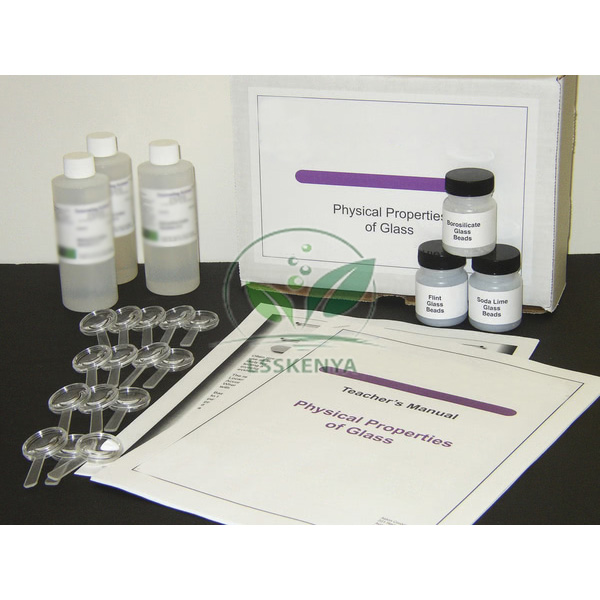
The activity is built around printed teaching material: a Teachers Manual, a Student Guide and Analysis copy-masters that the teacher can photocopy for each learner. It frames glass as one piece of evidence that investigators combine with others to reconstruct the most likely sequence of events.
| Parameter | Value |
|---|---|
| SKU | LSK-CL-10261 |
| Subject | Forensic science: chemical and physical properties of glass |
| Printed material | Teachers Manual; Student Guide and Analysis copy-masters |
| Format | Class activity |
| Supplied by | Science Lab Supplies, Ambala, India |
Applications and Experiments for Physical Properties of Glass
The activity shows students that glass fragments are not all alike. Forensic glass comparison commonly looks at properties such as density, refractive index and the way glass fractures, and students learn how matching or excluding a fragment can help investigators work backwards from the evidence to the event.
- Secondary school forensic science units and science clubs.
- Physics and chemistry links: density and refraction applied to real evidence.
- B.Sc. forensic science: introduction to trace evidence and glass analysis.
- Cross-curricular crime scene days that combine several evidence types.
Glass pieces have sharp edges; students should handle them with forceps and gloves and wear eye protection.
Standard Scope of Supply
The activity includes the Teachers Manual and the Student Guide and Analysis copy-masters described above. Any further materials in the kit are itemised on the quotation, so you can see exactly what will be delivered before ordering.
Packing, MOQ and Lead Time
Order one activity for a single class or several for a forensic science programme across year groups. The quotation confirms packing, delivery time and price for your quantity, and other items of school laboratory equipment for the same unit can be quoted together.
Science Lab Supplies, a registered exporter with an Importer-Exporter Code, can ship to buyers in the Philippines, Nepal, Bangladesh, Zambia, Rwanda and South Africa. Questions go through the contact page; to collect several items use the enquiry cart, and for tenders the lab tender page.
Frequently Asked Questions
What teaching material comes with Physical Properties of Glass?
The activity includes a Teachers Manual and Student Guide and Analysis copy-masters, so the teacher has background notes and students have worksheets to record and interpret results.
What does the activity teach about forensic science?
It shows how the chemical and physical characteristics of glass differ and how forensic scientists use those differences, together with other evidence, to reconstruct what happened at a scene.
Who supplies Physical Properties of Glass?
Science Lab Supplies supplies the activity from Ambala, India, preparing quotes directly for schools, colleges and tender contractors building forensic science collections.
Is it safe for school students?
Yes, with care. Any glass samples should be handled with forceps and gloves, eye protection worn, and broken glass disposed of in a marked container under teacher supervision.
Related Forensic and Density Teaching Items
These items widen the glass activity into a full forensic lesson: tape to secure a mock scene, fabric swatches for fibre evidence, a magnifier for examining fragments and a density cube set that teaches the density measurement idea behind glass comparison. Teachers often order them in one lot.
- Crime Scene Tape — cordons off the staged scene.
- Fabrics Sample Pack — a second type of trace evidence.
- Magnifier — inspecting fracture edges and surfaces.
- Density Cube Set — practising density measurement.
Browse the full Chemistry Lab range or all school lab equipment.
Last updated: 25 September 2026