Expansion Index Test Apparatus
Product Code : LSK-SM-10671
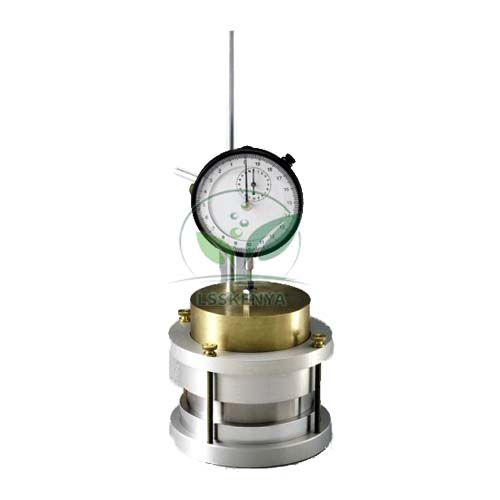
Expansion Index Test Apparatus (SKU LSK-SM-10671) measures how much a compacted soil swells when soaked under a set load, giving the expansion index used to rate expansive clays for foundations, slabs and pavements. Geotechnical labs in engineering colleges, polytechnics and TVET centres use it. Science Lab Supplies supplies the unit from Ambala, India to colleges, testing laboratories, tender contractors and distributors.
Specifications
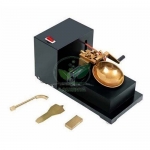
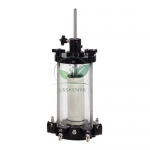
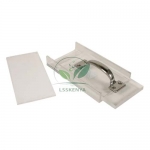
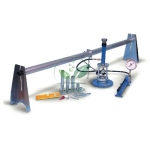
The unit has a cast aluminium base and collar held by brass hold-down rods, and a stainless steel specimen ring of 101.6 mm ID x 25.4 mm high. Porous stones sit against the specimen, a 5.7 kg brass weight loads it, and a dial indicator records the swell.
| Parameter | Value |
|---|---|
| SKU | LSK-SM-10671 |
| Base and collar | Cast aluminium; brass hold-down rods |
| Specimen ring | Stainless steel, 101.6 mm ID x 25.4 mm high (4 x 1 in) |
| Porous stones | 101.4 mm dia x 12.7 mm thick (4 x 1/2 in) |
| Loading weight | Brass, 5.7 kg (12.6 lb) |
| Dial indicator | 0.3 in range x 0.0001 in, or 8 mm range x 0.002 mm |
| Test duration | 24 hours or less on the cured sample |
| Supplied by | Science Lab Supplies, Ambala, India |
Applications and Experiments for the Expansion Index Test Apparatus
The specimen is compacted into the ring, loaded with the brass weight and inundated with water; the dial reading of vertical swell over the test period gives the expansion index. Results help students and engineers classify how expansive a clay is before design work begins.
- B.Tech / B.E. civil engineering: expansion potential of clays in foundation engineering practicals.
- M.Tech geotechnical and research labs: comparing treated and untreated expansive soils.
- Diploma civil engineering and TVET construction modules: why swelling clays crack floors and pavements.
Standard Scope of Supply
The listing describes the cast aluminium base and collar with brass hold-down rods, the stainless steel specimen ring, porous stones, the 5.7 kg brass loading weight and a dial indicator in inch or metric graduation. State inch or metric on your enquiry so the quotation names the dial fitted.
Packing, MOQ and Lead Time
Ask for one apparatus or several for parallel testing; the quotation shows the packing, delivery time and price for that quantity. Extra porous stones or a compactor for specimen preparation can be listed alongside, useful for institutes buying TVET workshop equipment on one tender.
Science Lab Supplies holds an Importer-Exporter Code as a registered exporter and can ship to buyers in Kenya, Ghana, Ethiopia, Tanzania, Uganda and the UAE. Start with the contact page or the enquiry cart; for tenders, visit the lab tender page.
Frequently Asked Questions
How long does an expansion index test take?
The specification gives a test duration of 24 hours or less on the cured sample, so a class can set up specimens one day and read the final swell the next.
Which dial indicator is fitted?
Two graduations are listed: 0.3 in range with 0.0001 in divisions, or 8 mm range with 0.002 mm divisions. State your preference and the quotation will confirm it.
What does the 5.7 kg brass weight do?
It applies a constant surcharge to the specimen while it soaks, so the measured swell reflects a standard loading condition.
Who supplies the apparatus?
Science Lab Supplies supplies it from Ambala, India to universities, polytechnics, TVET centres, testing labs, contractors and distributors.
Related Expansive Soil Test Equipment
Swelling clays are usually studied with several tests together, so these Soil Mechanics items often join the expansion index apparatus: a volume change meter, a shrinkage limit set, an oedometer for consolidation and a compactor for preparing specimens.
- Soil Volume Change Meter — potential volume change rating of soils.
- Shrinkage Limit Set — the drying side of volume change.
- Consolidation Apparatus — compression and settlement of clays.
- Automatic Mechanical Soil Compactor — uniform compaction of test soils.
Browse the full Soil Mechanics range or all TVET lab equipment.
Last updated: 25 September 2026