Welding Filter Lens
Product Code : LSK-CL-10274
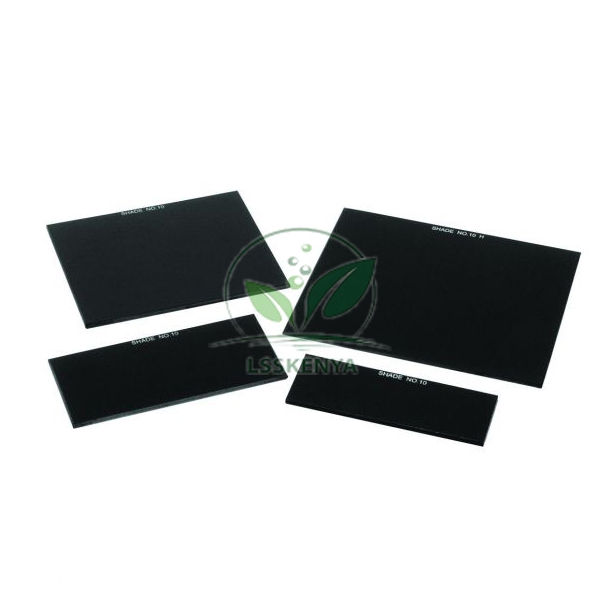
Welding Filter Lens (SKU LSK-CL-10274) is a pack of ten Shade 9 filter lenses, the shade recommended for viewing burning magnesium and similar intensely bright reactions in the chemistry lab. Teachers hand them to students during combustion demonstrations so the white flame can be observed through a dark filter rather than with the naked eye. Science Lab Supplies supplies the pack from Ambala, India, to schools, colleges, training institutes, tender contractors and distributors.
Specifications
Each pack holds ten welding filter lenses rated Shade 9. Shade numbers describe how strongly a filter darkens the light passing through it, and Shade 9 is the grade recommended in the specification for watching burning magnesium and other very bright chemical reactions.
| Parameter | Value |
|---|---|
| SKU | LSK-CL-10274 |
| Type | Welding filter lens |
| Shade | 9 |
| Pack size | 10 filters |
| Intended use | Viewing burning magnesium and similar bright reactions |
| Supplied by | Science Lab Supplies, Ambala, India |
Applications and Experiments for the Welding Filter Lens
Burning magnesium gives off a dazzling white light that is uncomfortable and potentially harmful to look at directly. Holding a Shade 9 filter between the eye and the flame lets students watch the reaction and the white ash forming, which keeps attention on the chemistry rather than on the glare.
- NCERT Class 10 science, Chemical Reactions and Equations: burning magnesium ribbon in air to form magnesium oxide.
- Middle-school science: observing combustion and the signs of a chemical change.
- Class 11 chemistry: reactions of alkaline earth metals with oxygen.
Burning magnesium is very hot and bright. Run the demonstration only under teacher supervision, hold the ribbon with tongs, wear safety glasses, and keep students at a distance with the filter in front of their eyes throughout.
Standard Scope of Supply
One pack contains 10 Shade 9 welding filter lenses. Magnesium ribbon, tongs, a burner and safety glasses are not included; they are available as separate items and can be quoted with the filters for a complete combustion demonstration kit.
Packing, MOQ and Lead Time
Buy one pack for a single class or several packs for a school or district. Your quotation will give packing, delivery time and price for the number of packs ordered, and other chemistry lab equipment can be added to it.
Because Science Lab Supplies is a registered exporter holding an Importer-Exporter Code, it can ship to buyers in Nigeria, Kenya, Ghana, Ethiopia, Tanzania and Uganda. Ask for a price through the contact page or the enquiry cart, and use the lab tender page for tender enquiries.
Frequently Asked Questions
How many filters are in a pack?
Each pack contains 10 Welding Filter Lenses, all Shade 9, enough to share among a small class or several groups during a demonstration.
Why use a welding filter in a chemistry lab?
Burning magnesium produces an intense white light. A Shade 9 welding filter is recommended for viewing it, so students can watch the reaction without staring into the glare.
Who supplies the Welding Filter Lens?
Science Lab Supplies supplies the pack from Ambala, India, to schools, colleges, contractors and distributors, together with magnesium ribbon and handling tools.
Do the filters replace safety glasses?
No. The filters are for viewing the flame. Students should still wear safety glasses and follow the teacher's instructions during any combustion demonstration.
Related Combustion Demonstration Items
These items are used alongside the filters when burning magnesium or other metals in class: the metal itself, a spoon for holding samples in the flame, tongs for handling hot material and safety glasses for eye protection.
- Magnesium (Bar) — metal for combustion demonstrations.
- Deflagrating Spoon — holds samples in a flame or gas jar.
- Crucible Tongs — for gripping burning ribbon and hot items.
- Safety Glasses — eye protection worn during the demonstration.
Browse the full Chemistry Lab range or all school lab equipment.
Last updated: 25 September 2026
100ml.jpg)