Balance Beam Triple With Tare
Product Code : LSK-CL-10039
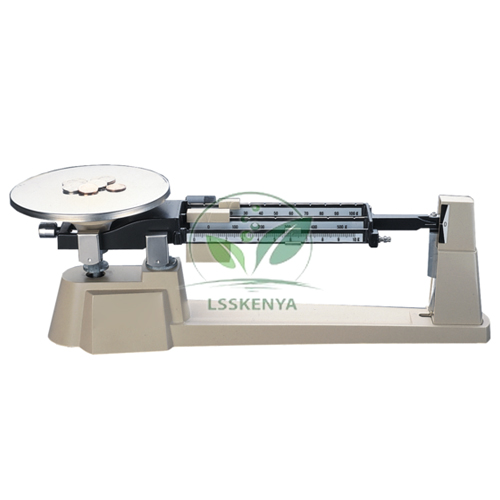
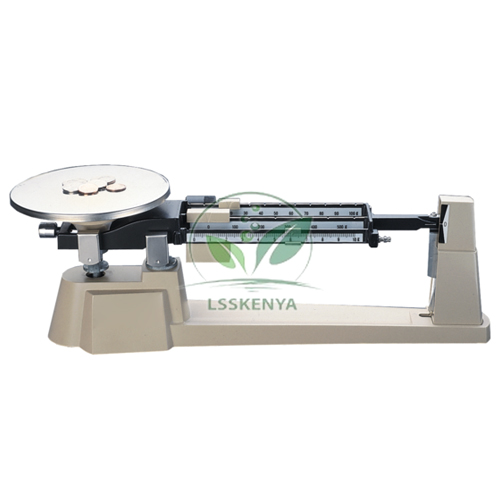
Balance Beam Triple With Tare (SKU LSK-CL-10039) is a single-pan, low-form triple beam balance with a tare facility. Sliding masses on three notched beams are moved until the pointer balances, and the mass is read straight from the beams, with no power needed. Fitted with additional masses it weighs up to 2.6 kg. Student chemistry, physics and biology practicals rely on this type. Science Lab Supplies supplies it from Ambala, India, to schools, colleges, tender contractors and distributors.
Specifications
Three notched weighing beams each carry a sliding mass with a centre-indicating mark, so every rider sits positively in a notch and is read without guesswork. The single pan is mounted in a low-form layout for stability, a tare lets a container be balanced out, and capacity extends to 2.6 kg with additional masses.
| Parameter | Value |
|---|---|
| SKU | LSK-CL-10039 |
| Type | Triple beam balance with tare, single pan, low form |
| Beams | Three notched weighing beams |
| Sliding masses | Centre-indicating |
| Maximum load | Up to 2.6 kg when used with additional masses |
| Supplied by | Science Lab Supplies, Ambala, India |
Applications and Experiments for the Triple Beam Balance
Reading a triple beam balance teaches place value in measurement: the heaviest beam gives the large steps and the lighter beams refine the result. Schools choose it as durable, power-free student equipment for routine weighing of chemicals, specimens and apparatus.
- Middle and secondary school science: measuring mass and finding density with a measuring cylinder.
- Chemistry practicals: weighing solids for solutions and recording mass changes in reactions.
- Biology: weighing plant or seed samples in growth experiments.
- Physics: mass of objects for density, moments and specific heat experiments.
Before weighing, move all riders to zero and set the tare so the pointer rests on the zero mark with the empty container on the pan.
Standard Scope of Supply
The balance is supplied as a single unit with its pan, three beams and sliding masses. The additional masses needed to reach 2.6 kg are referred to in the listing; whether they are included is confirmed on the quotation, so mention if you need the full range.
Packing, MOQ and Lead Time
Quotes are available for one balance or a class set for every student group, stating packing, delivery time and price for that number. Other balances from our school chemistry lab equipment in India range can appear on the same quote.
Being a registered exporter with an Importer-Exporter Code, Science Lab Supplies can ship to buyers in Saudi Arabia, Oman, the Philippines, Nepal, Bangladesh and Zambia. Our contact page and enquiry cart both reach the sales desk, and the lab tender page covers tender supply.
Frequently Asked Questions
How much can the triple beam balance weigh?
It weighs up to 2.6 kg when used with additional masses. Without them the range is set by the three beams alone.
What does the tare do?
The tare lets you balance out the mass of a beaker or weighing boat first, so the beams then read only the mass of the substance added.
Who supplies the Balance Beam Triple With Tare?
Science Lab Supplies supplies it from Ambala, India, and can offer it with Beranger, dial and electronic balances for comparison.
Why are the beams notched?
Notches hold each sliding mass at an exact position, and the centre-indicating mark shows the reading clearly, which reduces reading errors by students.
Related Weighing Equipment
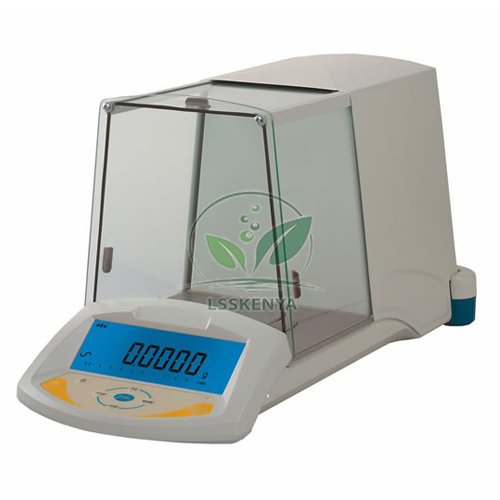
A school lab often pairs triple beam balances with a heavy-duty mechanical balance, a simple dial scale and an electronic balance for finer work. These four options cover those roles and can go on the same quotation as the triple beam balance.
- Balance Beam Beranger 2 Pan — 2 kg two-pan balance for heavier articles.
- Balance Electronic — digital balance with auto calibration.
- Balance Kitchen Scale — wide-dial scale for junior classes.
- Semi-Analytical Balance with Box of Weighing Stones — finer mechanical weighing.
Browse the full Chemistry Lab range or all school lab equipment.
Last updated: 25 September 2026