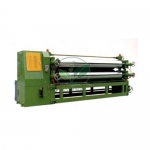
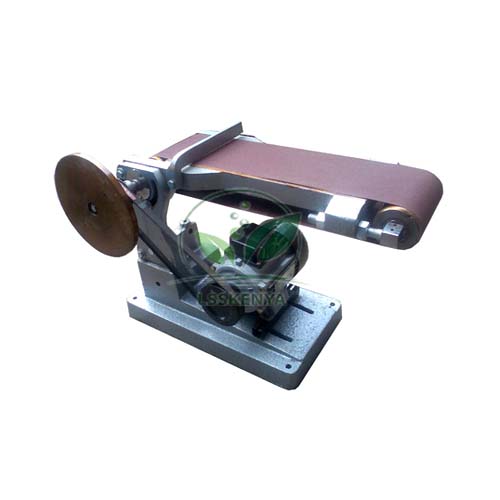
Belt Sander
Product Code : LSK-WWPT-10725
Belt Sander (SKU LSK-WWPT-10725) is a heavy-duty machine that grinds and finishes workpieces on a moving abrasive belt. With suitable belt grades it finishes stainless steel, mild steel, copper, brass, aluminium and castings, which makes it useful in fitting, fabrication and general workshops at ITI, polytechnic and TVET institutes. Science Lab Supplies supplies it from Ambala, India to training institutes, workshops, tender contractors and distributors.
Specifications
The sander is of heavy-duty construction and is offered in several belt sizes: 48 x 6 inch, 72 x 8 inch and 92 x 8 inch, with other sizes available to the buyer's requirement. Belt grade and type are chosen to suit the material being finished.
| Parameter | Value |
|---|---|
| SKU | LSK-WWPT-10725 |
| Belt sizes | 48 x 6 in (about 1219 x 152 mm); 72 x 8 in (about 1829 x 203 mm); 92 x 8 in (about 2337 x 203 mm); other sizes on request |
| Materials finished | Stainless steel, mild steel, copper, brass, aluminium, castings and similar, with suitable belts |
| Construction | Heavy duty |
| Supplied by | Science Lab Supplies, Ambala, India |
Applications and Experiments for the Belt Sander
The belt sander is used to remove burrs, flatten faces, blend welds and bring parts to a uniform finish. It supports ITI fitter, sheet metal and welder trades, TVET fabrication and maintenance modules, and polytechnic workshop practice where trainees finish the parts they have cut, drilled or welded.
- Deburring and edge finishing of cut steel, brass and aluminium parts.
- Blending weld beads and brazed joints flush with the parent metal.
- Finishing small castings after fettling.
- Teaching belt selection, grit sequence and safe work-holding on an abrasive machine.
Grinding metal throws sparks and hot dust: use eye protection, keep the rest close to the belt, keep flammable dust away and work under supervision.
Standard Scope of Supply
The Belt Sander is supplied as a single machine in the belt size you select, as described above. Abrasive belts are consumables; state the materials you will finish and the grades needed, and they can be listed on the same quotation as the machine.
Packing, MOQ and Lead Time
Ask for a quotation for one sander or for a row of finishing stations in a fitting shop. The quotation gives the packing, delivery time and price for the belt size and quantity you choose, and other TVET workshop equipment can be priced on it too.
As a registered exporter with an Importer-Exporter Code, Science Lab Supplies can ship to buyers in Bangladesh, Zambia, Rwanda, South Africa, Qatar and Sri Lanka. Send your requirement through the contact page or enquiry cart, or view the lab tender page.
Frequently Asked Questions
Which belt sizes are available?
The standard sizes are 48 x 6 inch, 72 x 8 inch and 92 x 8 inch. Other belt sizes can be offered to your requirement; state the size in the enquiry.
Can it finish non-ferrous metals?
Yes. With suitable belt grades it finishes copper, brass and aluminium as well as stainless and mild steel and castings. Use separate belts for ferrous and non-ferrous work to avoid contamination.
Who supplies the Belt Sander?
Science Lab Supplies supplies it from Ambala, India, to ITIs, polytechnics, TVET centres, tender contractors and distributors, together with other workshop machines.
Can it be included in a workshop tender?
Yes. Send the belt size, quantity and tender specification through the contact page, and the quotation will list the sander item by item.
Related Workshop Machines
A belt sander is usually the last step after cutting, drilling or joining. These four machines cover those earlier steps in a training workshop, so parts can be cut, drilled, joined and then finished on the same bench line and quoted together.
- Horizontal Band Saw Machine — cutting stock to length.
- Band Saw Machine — cutting shapes before finishing.
- Drilling Machine — 38 mm capacity drilling.
- Band Saw Brazing Machine — joins blades whose joints are then dressed.
Browse the full Wood Workshop Portable Tool range or all TVET lab equipment.
Last updated: 25 September 2026